
How to choose a trail running shoe
Stack, lugs, geometry — what actually matters when you head off-road.

A trail shoe is the most decisive piece of kit a runner owns. It dictates how confidently you place a foot on wet granite, how your legs feel at kilometre forty, and whether the next descent is a flow state or a careful negotiation. The right model is rarely the one with the loudest marketing — it is the one matched to your terrain, distance and running style.
Understanding terrain
Terrain dictates everything. Before considering brands, be honest about where you actually run — not where you wish you ran.
- Hard-packed trails
- Forest paths and fire roads reward shallow lugs (under 4 mm) and a smoother, road-adjacent ride.
- Technical terrain
- Roots, slabs and steep singletrack call for a precise, low-stack platform with reliable rock protection.
- Mud
- Deep, widely spaced lugs (5 mm+) and a sticky compound are non-negotiable; everything else is secondary.
- Rocky terrain
- Look for a rock plate or dense midsole insert — your forefoot will thank you on long descents.
What really matters in a trail shoe
Five variables decide whether a shoe is right for you. Read them in this order.
- Grip & lug depth
- Match lug geometry to your terrain. More is not better — it slows you on hardpack and wears faster.
- Cushioning
- Stack height is a tool, not a virtue. Higher stacks protect on long distances; lower stacks deliver ground feel and stability.
- Stability
- A wide platform and a moderately rockered geometry will keep your ankle honest on uneven ground.
- Weight
- Under 280 g for racing, under 320 g for long days. Heavier shoes accumulate fatigue you do not feel until late.
- Protection
- Toe bumpers, rock plates and reinforced uppers matter on technical lines. They add grams worth carrying.
“The best trail shoe is the one you stop thinking about.”
Common mistakes
We see the same errors repeat in our fitting sessions. Avoid these and you will already be ahead of most buyers.
- Choosing on aesthetics
- A shoe that looks fast on a shelf can be wrong for your foot shape and terrain.
- Too much cushioning
- Maximalist stacks feel safe in the store and unstable on a wet root.
- Incorrect sizing
- Feet swell on long efforts. A half size up, with a snug midfoot, is almost always correct.
- Road shoes off-road
- Smooth outsoles are dangerous on damp terrain — and the upper will not survive a season.
ATHLIX expert recommendation
If we had to pick a single shoe for the serious amateur who wants a do-everything trail companion, it is the NNormal Kjerag. Co-developed with Kilian Jornet, it is built around a single-piece Matryx upper and a Vibram Litebase outsole — a low-stack, repairable platform that lasts longer than almost anything in its category. It rewards good form and improves it.
Final thoughts
Choosing a trail shoe well is an exercise in honesty. Match the tool to the terrain, ignore the marketing, and the shoe will disappear underneath you — which is exactly what a great shoe should do.
- Pick lug depth to match your most frequent terrain, not your hardest day.
- Stack height is a tool — not a quality marker.
- Size up half a size; keep the midfoot snug.
- Repairability and durability matter more than gram-counting for most runners.
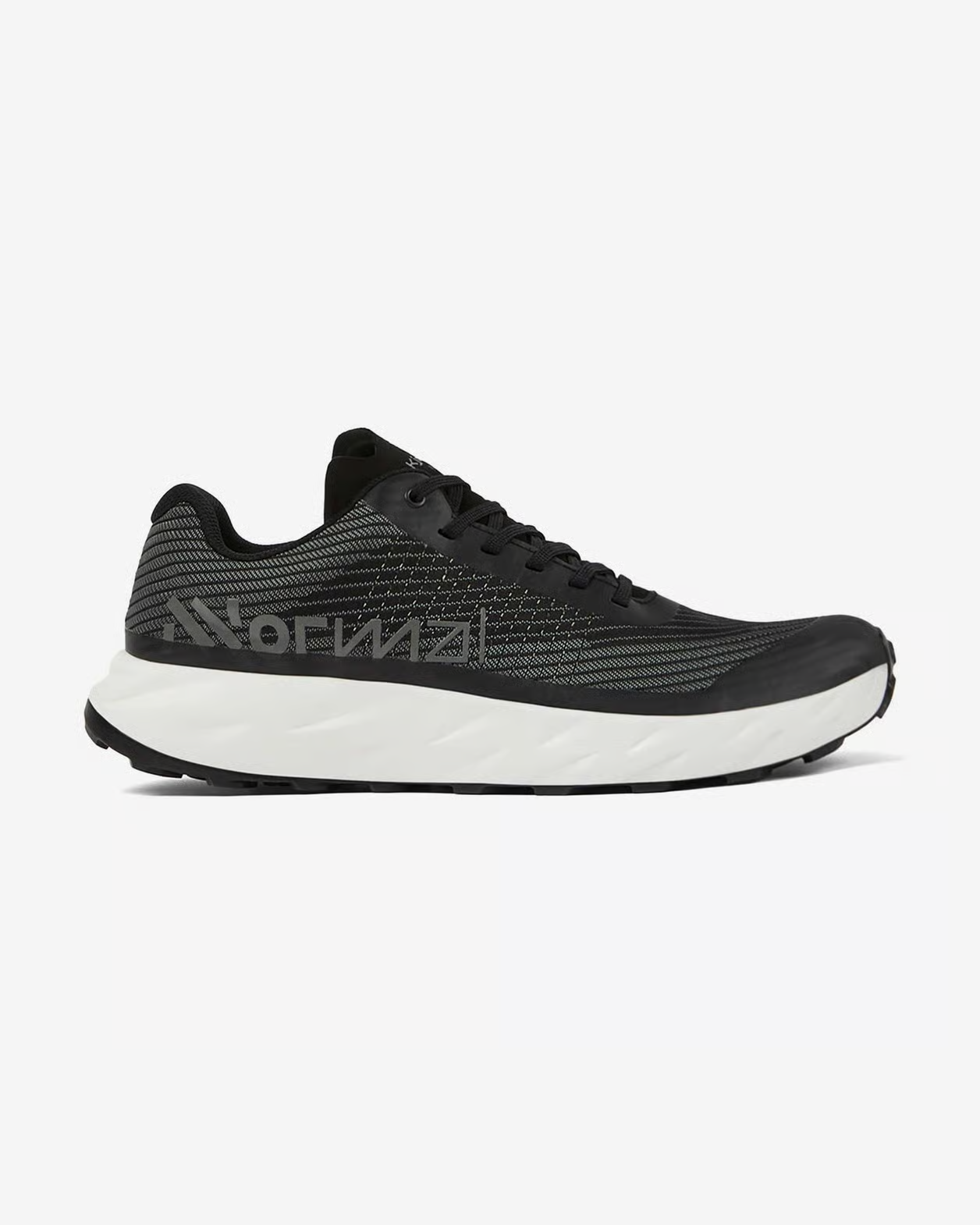
Kjerag Trail Running Shoes
Co-developed with Kilian Jornet. The Kjerag is the long-haul reference for runners who value ground feel and durability over hype.
Still unsure? Speak with an ATHLIX specialist.
Talk with an ATHLIX running specialist.
Book a conversation
