
The complete lens guide for skiing
VLT, base tints and why your goggle matters more than your jacket.

You can ski in a worn-out jacket. You cannot ski well through the wrong lens. Visibility is the most overlooked safety variable in skiing — and the most decisive performance one. Understanding it is straightforward.
What is VLT?
VLT — Visible Light Transmission — is the percentage of light that reaches your eye through the lens. A low VLT (5–20%) is for bright bluebird days. A high VLT (50%+) is for storms and dusk. A versatile lens sits between 25–45% and handles most real conditions.
Lens colors explained
Tint shapes contrast as much as it dims light. Choose by condition, not by aesthetic.
- Sunny
- Dark grey, brown or mirrored low-VLT lenses preserve true color and reduce eye fatigue.
- Flat light
- Rose, amber and yellow tints lift contrast and reveal terrain definition that grey hides.
- Storms
- Clear or high-VLT yellow lenses maximize light intake when visibility collapses.
- Mixed weather
- Photochromic lenses adjust automatically and remove guesswork in changing conditions.
“Buy the goggle first. Everything else is negotiable.”
Why lens quality matters
A cheap lens is a fatigue tax you pay all day.
- Eye fatigue
- Optical distortion at the lens edges forces your eyes to compensate constantly.
- Contrast
- Premium lenses use spectral filtering to enhance terrain features, not just dim them.
- Reaction time
- Clearer optics shorten the gap between seeing a feature and reacting to it.
- Safety
- On a steep face, the difference between a crisp shadow and a vague one is the difference between flow and a fall.
ATHLIX expert recommendation
The Julbo Launcher Reactiv Goggle is our reference. Julbo's Reactiv photochromic lens shifts across VLT 16–75% in tenths of a second — the rare goggle that genuinely keeps up with light changes on a long alpine line. The freeride-oriented frame seals cleanly against a helmet and the optics are honest at every tint.
Final thoughts
Invest in glass before fabric. A great lens turns marginal conditions into rideable ones and protects you from the only injury skiers consistently underestimate: the slow, accumulated tax of bad optics.
- Pick VLT to match your most common conditions, not your sunniest day.
- Photochromic lenses remove decisions in changing weather.
- Tint shapes contrast; contrast shapes safety.
- Optical quality is a fatigue investment, not a luxury.
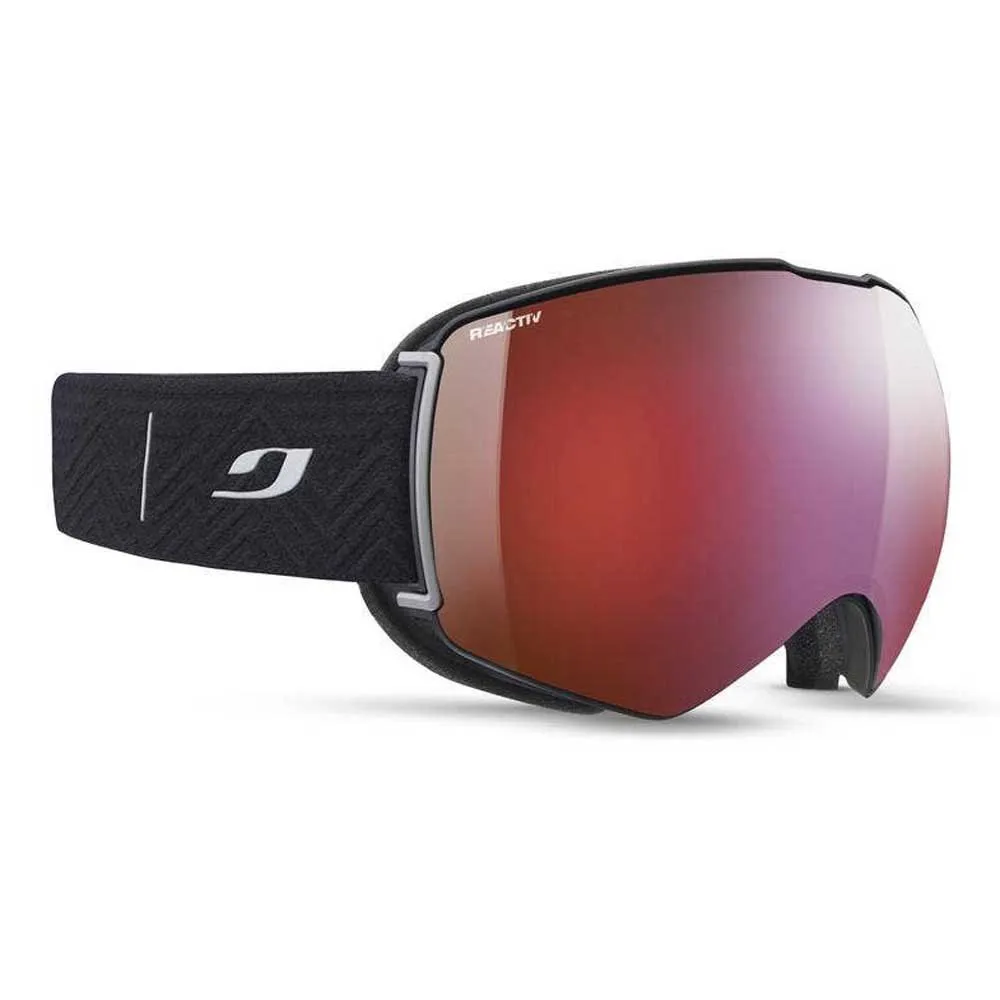
Launcher Reactiv Goggles
Reactiv photochromic, VLT 16–75%, 0.1 s reactivity. The freeride goggle that keeps up with the light.
Still unsure? Speak with an ATHLIX specialist.
Talk with an ATHLIX ski specialist.
Book a conversation
