
Gravel cockpits: flare, width and reach
Why the right handlebar makes more difference than the frame.

Riders obsess over frames. They should obsess over cockpits. Your hands are on the bar for every minute of every ride — width, flare and reach define comfort, control and how late into a day you can still descend with confidence.
Handlebar width
Width controls leverage, breathing room and stability. It also dictates how a loaded bike behaves.
- Narrow (under 42 cm)
- Aerodynamic, fast-handling, ideal for tighter singletrack and racing.
- Wide (44 cm+)
- More control over rough terrain and better breathing on long climbs.
- Bikepacking
- Wider bars distribute weight from front rolls and reduce shoulder fatigue.
- Aggressive riding
- Match width to shoulder span; too wide kills snap, too narrow kills confidence.
What is flare?
Flare is the outward angle of the drops relative to the tops. On gravel, it is one of the most underrated comfort variables on the bike.
- Descents
- Flared drops widen your effective grip when you need stability most.
- Wrist comfort
- A 10–16° flare keeps wrists neutral and reduces nerve compression on long days.
- Gravel handling
- Increased leverage in the drops translates directly into steering precision on loose surfaces.
“Frames get the attention. Cockpits decide how long you can ride.”
Reach and stack
Reach (how far the bar extends forward) and stack (its vertical position) define how aggressive your position is. Long-and-low looks fast but accumulates fatigue. Most gravel riders are better served by a shorter reach (70–80 mm) and a slightly higher stack — you will descend better and end the day fresher.
Carbon vs aluminum
Both materials work. Choose deliberately, not by default.
- Vibration damping
- Quality carbon damps high-frequency chatter that aluminum transmits straight to your hands.
- Weight
- A premium carbon cockpit saves 100–150 g over aluminum — meaningful, but not transformational.
- Responsiveness
- Modern carbon layups can be tuned for compliance or stiffness; aluminum is more uniform.
ATHLIX expert recommendation
Our pick is the Gemini ALHENA Integrated Carbon Gravel Handlebar. A boutique Spanish carbon house, Gemini produces a one-piece cockpit with full internal cable routing, a 12° flare and a 295 g weight that rivals WorldTour cockpits. The build quality is the kind you usually only see on hand-painted frames. It transforms a competent gravel bike into a precise one.
Final thoughts
A great cockpit is invisible — your hands are simply where they belong, all day. Spend less on paint and more on the contact points. Your shoulders, wrists and lower back will return the investment many times over.
- Match bar width to shoulder span, not trends.
- 10–16° flare is a comfort and control upgrade on gravel.
- Shorter reach, higher stack ages well over long days.
- Quality carbon damps fatigue; quality aluminum is honest and durable.
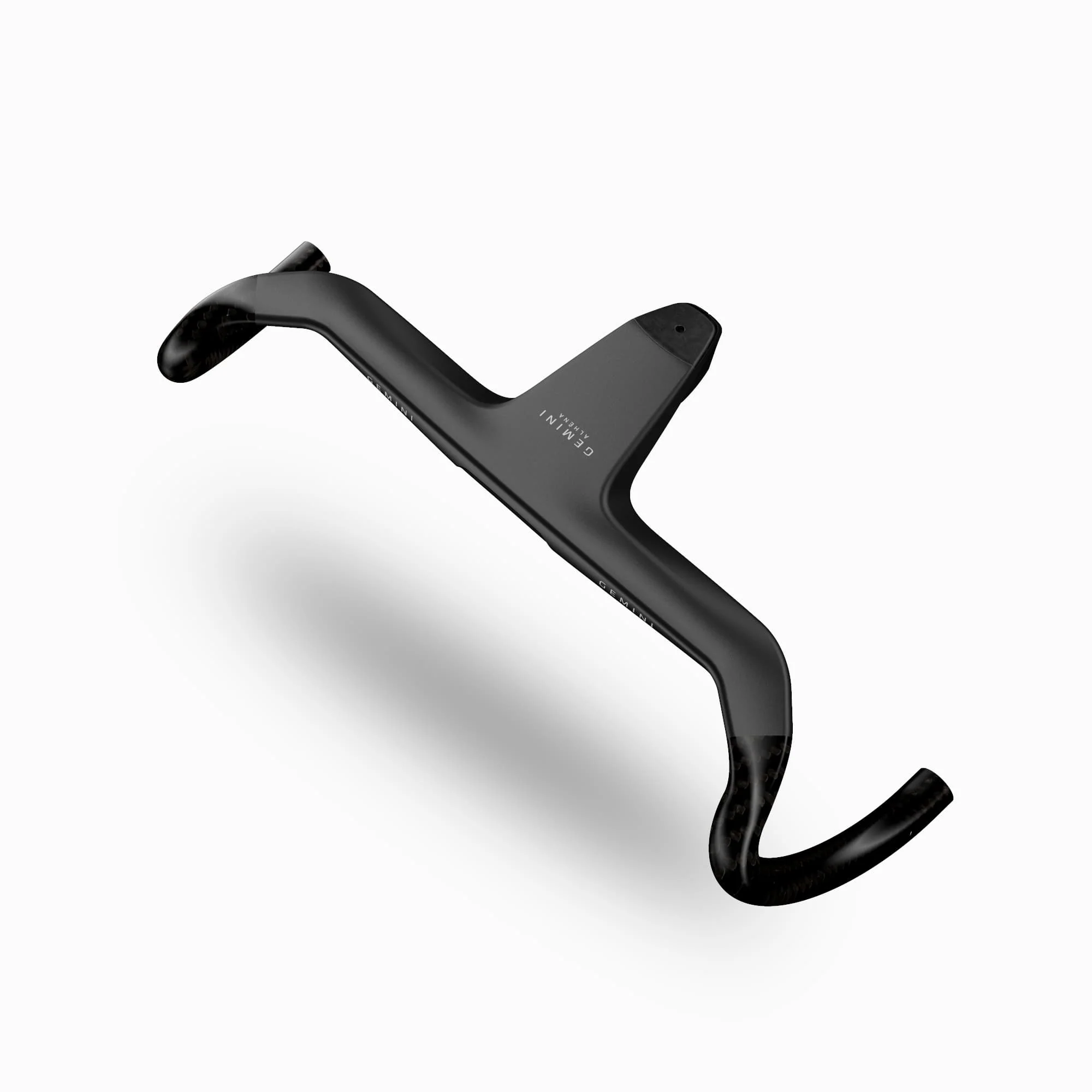
ALHENA Integrated Carbon Gravel Handlebar
One-piece monocoque carbon, 12° flare, internal routing, 295 g. Boutique engineering at WorldTour weight.
Still unsure? Speak with an ATHLIX specialist.
Speak with an ATHLIX cycling expert.
Book a conversation
